“A greatest way to anticipate the future is shape it yourself.” — Peter Drucker
Changing a basement from damp and underused into a healthy, usable room is absolutely achievable. Kick off with a detailed floor plan that maps out the outside walls, support partitions, doors, windows, duct runs, and plumbing lines. Doing this makes sure you design around non-negotiable elements and sidestep a cramped, cave-like feel.
Decide the space’s role—whether that means it becomes a guest suite, home gym, home office, accessory dwelling unit, or entertainment room. Keep in mind to account for code requirements, such as egress windows for sleeping areas. Set aside funds for materials, equipment, permits, and labor from the start. Remodels commonly run over early budgets and stretch over several months, so important to know if you need licensed trades to handle framing/structural, wiring, or pipework work – Check here about basement remodeling.
Get the necessary building permits using complete plans and get ready for inspections. They typically include structural items, electrical, plumbing, and the final sign-off. After tear-out exposes the base structure, check the area for cracks, leaks, mould, or standing water. If you discover major defects, call in licensed pros prior to moving to insulating and framing.
Experienced basement renovation companies typically offer no-cost consultations, itemized pricing breakdowns, and end-to-end coordination. Many handle moisture control, structural repairs, insulating, and finishing. This walkthrough is designed to help in remodeling and transforming your lower level. It covers planning steps, cost planning, permitting, and when to hire a pro to achieve a lasting makeover and successful finishing.
Why Remodel & Transform Your Basement
Converting an raw basement into livable area enhances safety, air quality, and home value. A well-planned basement remodel begins by addressing moisture, cracks, and insulation issues. This initial step reduces the chances of mold, reduces dust buildup and insects/rodents, and fosters a healthier home environment.
Health And Safety Upgrades
Below-grade spaces often face moisture intrusion and condensation. Effective waterproofing and insulation are essential for preventing warm, humid air from meeting cold concrete, reducing the risk of mold. Closing up gaps and adding foam insulation on concrete provides vapor control, removing the requirement for a dedicated vapour barrier.
Tear-out often exposes concealed cracks in the foundation, pooled water, and mould. Addressing these issues before closing in protects the building and health of residents. Adding a dehumidifier unit, adequate ventilation, and water-resistant materials further boosts air quality indoors.
Financial And Quality-Of-Life Advantages
A properly executed basement transformation adds functional space and market value. Lower levels can be turned into theater rooms, guest suites, ADUs, or offices. Built-in storage by brands like Andersen or Milwaukee-grade fixtures improve day-to-day function and lasting value.
Finishing a basement offers added flexibility. Changing a damp storage area into a clean, temperature-controlled room expands living possibilities and can provide rental income. Prioritizing waterproofing, foundation repairs, and proper insulation helps ensure both everyone’s safety and protection of your investment.
Planning Your Basement Renovation
A well-thought-out plan is crucial to a successful basement renovation. It ensures the job remains on schedule and within your budget. Kick off by establishing clear objectives for the way you plan to use the space, including circulation and natural light. Deciding these decisions up front helps prevent pricey changes down the line.
Start with exact measuring. Use a tape measure and grid paper or a digital layout tool to mark the space. Capture key items like beams, window openings, doors, ducts, and plumbing lines. Additionally, record the location of current HVAC and electrical runs. Lay out the layout of your planned rooms, like a bathroom, sleeping area, workspace, or home theatre. Aim for a plan that doesn’t create lots of small areas.
Create A Detailed Layout
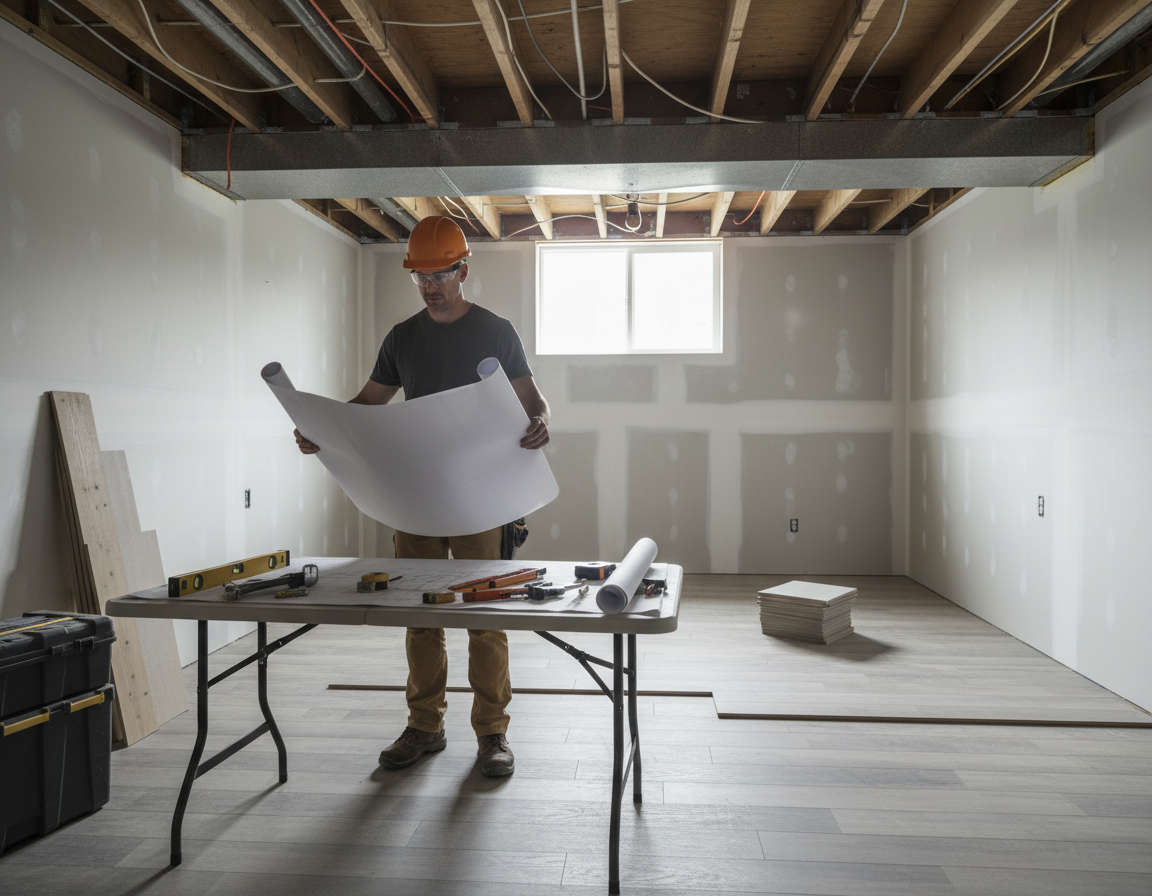
Sketch a complete plan at scale. Add wall locations, window dimensions, and ceiling clearance. When you’re planning a bedroom, make sure the egress window meets minimum size rules and there is a secondary exit. Locate rooms that require plumbing near existing stacks to minimize rework. Share your plans with a builder early to sync up with your vision before framing starting.
Budget & Time Estimates
Split costs across materials, permit fees, labor, and a contingency fund of 10–20%. Consider if to rent tools or purchase them. A full basement renovation may run a few thousand dollars and take weeks to months, based on the size.
Plan for disruption at home from noise, dustiness, and less usable space. A design pro or contractor may help with phased timelines and sequencing trades. This method can cut delays and helps keep subcontractors on schedule.
Permits & Code Compliance
Obtain permits prior to starting work. Permit packages often require detailed drawings of wall placement, ceiling clearance, and window sizes. Expect for inspection checks on foundation, structural changes, and plumbing and electrical rough-ins.
Local building codes dictate egress window sizes and minimum ceiling heights for habitable rooms. Hiring an qualified builder like Renovate Builders can simplify the permit and inspection process.
Invest time into making precise plans, setting a practical budget, and coordinating with trades early on. This mindset lowers risks, simplifies the build-out of your ideas, and helps ensure a smooth remodeling process – Read here about basement remodeling.
Demolition And Foundation Inspection
Upgrading a basement starts with thorough demo and a careful foundation inspection. A methodical process reveals hidden issues and helps ensure safe conditions for the crew and the house. By pre-planning, you avoid unexpected costs and move along the project.
Demolition safety practices
Start by turning off power at the main panel and double-check it’s off with a voltage tester. Remove the space of loose furniture and unattached items prior to removing built-in elements. At all times use protective gear for hearing, eye protection, hands, feet, and respiratory protection.
Common tools include sledge hammers, pry bars, recip saws, power drills, and angle grinders with masonry blades. Use a vacuum with a HEPA/fine filter and fans to reduce dust buildup. Rent a skip for large waste or industrial bags for small loads. Adhere to local rules for disposal of gyprock, mouldings, and timber.
Save materials that are dry and intact. Label wiring and fixtures for the electrician. Carefully clean the space before bringing in a tradesperson to handle the next step.
Inspecting & repairing the foundation
With finishes removed, check for small fractures, wider floor cracks, mould, water pooling, drips, condensation, and wet spots. Photograph what you see and write down any active leaks. When you see structural movement or serious seepage, seek immediate advice from a licensed structural engineer or foundation specialist.
Small concrete defects is often repairable with concrete repair compounds. Pros take on underground utilities, leveling work, pier work, and additional structural work. Installing drain tile and sump systems helps prevent future water problems.
A lot of basement renovation companies include foundation assessment and waterproofing work as part of a full-service plan. Handling structure or water issues prior to framing and insulation prevents costly rework and protects the finished space.
Practical takeaway: carefully demo to reveal foundation issues, then fix them with licensed pros. Doing so ensures your basement remodel is stable and dry – Read full guide about basement remodeling.
Insulation And Waterproofing Strategies For A Basement Makeover
A great basement remodel depends on controlling heat and humidity. Start by examining the concrete for any evidence of water intrusion. Implement a layered system that combines rigid foam for thermal performance and targeted waterproofing. This approach guards your final materials and improves daily comfort.
Foam Board Installation
Install rigid foam panels, like 2″ and 0.5″ polystyrene, to dust-free, fully dry concrete walls using foam-board adhesive in a bead pattern. Make sure each panel fits snugly, then press it tight into place after the adhesive has grabbed briefly. Be sure to stagger the seams to prevent alignment.
Tape all joints with vapor-sealing tape, like Tuck Tape. When installed properly, the foam acts as an air-sealed thermal barrier. It prevents warm, moist indoor air from coming into contact with cold concrete. That greatly reduces condensation buildup during a basement transformation.
Additional Insulation Layers
Once the framing and electrical rough-in, install fiberglass batts in the stud bays to increase the R-value. A typical build includes two foam layers and a 3-1/2″ fiberglass batt to reach about around R-27 near the top of the wall.
Opt for fiberglass designed for below-grade spaces or moisture-prone zones. Always wear full PPE—eye protection, respirator, and skin coverage—when working with batts. What you’ll need include a caulking gun, box cutter, 4×8′ foam boards, foam adhesive, seam tape, and Great Stuff expanding foam.
Consider mineral wool (Roxul), spray-foam insulation, or foil bubble insulation as alternatives depending on budget and moisture control needs. Select products that fit your climate needs and local code for a lasting finished basement.
Waterproofing Best Practices
Address both outside and inside water prior to finishing work. Correct the grading outside and ensure downspouts send water away from the foundation walls. Add perimeter drains and a sump system if groundwater risk is present.
Use water-resistant paints or sealants on inside surfaces as a secondary measure. For repeat moisture issues, work with a professional waterproofing company that offers foundation repair and inside/outside solutions. Early water control helps prevent mould and safeguards your basement makeover.
| Step | Purpose | Common Materials | Notes |
|---|---|---|---|
| Rigid foam application | Thermal break; air-sealed barrier | 2-inch polystyrene, 1/2-inch polystyrene, foam adhesive | Stagger seams; seal with Tuck Tape; no separate vapor barrier needed |
| Studs and fiberglass | Boost R-value; finish-ready cavity | 3.5″ fiberglass batts rated for basements, Great Stuff | Add after rough-in; use PPE when handling |
| Other insulation options | Moisture control and fire resistance | Roxul (mineral wool), spray foam, foil bubble insulation | Choose based on budget and code |
| Exterior fixes | Reduce groundwater intrusion | Regrading, downspout extensions, exterior membranes | Fix before interior finishes for long-term basement waterproofing |
| Interior drainage systems | Handle water that reaches the foundation | Perimeter drains, sump pump, moisture-resistant coatings | Essential for basements with high water table |
Framing, Electrical, Plumbing, And Finishes For Basement Renovation
Maintaining a basement remodel on schedule requires a clear order. Start with sound framing, then coordinate electrical and plumbing rough-ins. Wrap up with humidity-resistant finish materials. Up-front decisions help avoid delays when working with a basement remodeling contractor or a full-service basement remodel company.
Basic framing steps begin at the concrete slab. Install PT sill plates anchored with concrete screws. Pick true, flat 2×4 lumber for top and bottom plates. Make sure studs are spaced 16 inches and the walls are straight, level, and plumb.
Assemble wall panels flat when possible or fasten the plates and insert studs on site for uneven floors or joists. Rely on a 4′ level and a laser level or plumb bob for precision. Core tools include a hammer drill, mitre saw, drill/driver, and clamps. Nail guns are handy, but hand-driven 10D nails and 2-1/2″ to 3″ construction screws are dependable.
Plan electrical and plumbing locations before enclosing walls. Lay out lights, power points, HVAC registers, and any planned bath or wet bar plumbing now. Pull permits and book inspections for structural, electrical, and plumbing work. Comply with codes for ventilation and escape/egress in bathrooms or egress bedrooms.
During demo/framing, turn off circuits and secure the meter if required. Mark boxes and trim insulation pieces to fit around them. Coordinate routes for pipes and venting to prevent conflicts with studs and beams. A basement remodel contractor will plan these tasks with inspections to prevent rework.
Pick flooring designed for below-grade conditions. Options include LVP, tile, epoxy, and engineered wood systems rated for below-grade installs. Specialized floating subfloors provide a thermal separation and reduce moisture risk.
Finish materials should resist moisture. Use moisture-resistant drywall where appropriate. Consider built-ins, closet systems, and cabinetry made from engineered products or sealed plywood. Work with a reputable basement contractor to align finishes to your budget and the purpose.
Key takeaways: fasten PT bottom plates to concrete, frame with 2×4 studs at 16″ O.C., align all electrical and plumbing rough-ins with permits and inspections, and select moisture-resistant flooring and finishes for long life. A trusted basement remodel contractor can enforce these requirements and keep the project moving.
Remodel And Transform Your Basement
A well-planned basement conversion turns unused space into a practical area of the house. Thoughtful planning work sets the stage for space types, circulation, lighting, and mechanical placement. Use scale drawings to check escape routes, ceiling clearance, and movement patterns prior to construction starts.
Design Ideas And Layout Planning
Tie basement ideas to the way you will live in the area. For a home theater, design acoustics, lighting layers, and tiered seating zones. An accessory dwelling unit or visitor suite requires separation, standalone utilities, and clear egress. A home gym benefits from tough surfaces, storage walls, and ventilation.
Don’t overdo over-partitioning. Keep lines of sight open where possible and place built-ins to increase storage capacity without overfilling the space. Confirm lighting plans, HVAC routing, and noise control in the early design phase.
Custom Solutions & Finishes
Custom storage, hidden speakers, and built-in entertainment units create a high-end finished-basement look. Choose floors like epoxy flooring, tile, LVP, or engineered wood flooring based on toughness and maintenance needs. Align insulation choices to cost and comfort goals; options include fiberglass, Roxul/mineral wool, and spray foam.
Finish packages range from economical to high-end. Select fixtures and materials that reflect how you’ll use the space and long-term upkeep. Consider special features like wine cellars, cedar-lined closets, or hidden compartments to add added value and character.
Hiring A Renovation Company
Work with a reputable basement renovation company for waterproofing, foundation repair, and permitting. Expect a clear contract that lists scope of work, timeline, payment plan, and warranty coverage. Check credentials, insurance coverage, and references before signing.
A lot of remodelers offer free consults, needs analysis, and project management. Renovate Builders offers site evaluation, permits, waterproofing work, foundation repairs, and schedule coordination to help hit deadlines and budgets. Ask for routine updates and written reports during the build.
| Project Phase | Key Tasks | Why it Matters |
|---|---|---|
| Design | Layout, sound control, lighting, egress verification | Ensures function, code compliance, and fewer changes later |
| Structural & Waterproofing | Foundation work, drainage systems, sealants | Protects investment and prevents moisture issues |
| Utilities | Electrical, plumbing, HVAC routing | Supports independent utilities and comfort needs |
| Final finishes | Flooring, cabinetry, built-ins, fixtures | Creates the final look and supports daily upkeep |
| Management | Permits, inspections, scheduling, communication | Helps keep the build on schedule and on budget |
Final Thoughts
Start your basement renovation with a strong plan and realistic goals. Pull required permits and plan demo safely. Up-front foundation checks are key. Fix any fractures or drainage issues prior to adding foam board insulation and framing.
Install pressure-treated plates and 2×4 stud framing for framing. Make sure electrical/plumbing are done properly, meeting code. Finish with moisture-resistant floors and custom built-ins for a lasting look.
Partnering with a professional basement remodeler can help make the project more manageable and safer. Pros bring expertise in moisture control, foundation work, and layout. Many offer free consultations and itemized estimates, which helps you remain within budget and timeline.
A well-planned basement remodel enhances health, comfort levels, and property value. It reduces mould and pest risks, adds usable living space, and improves air quality. To get great results, focus on water control and foundation repairs. Think about bringing in a seasoned pro such as Renovate Builders for guidance and oversight.
Related: Basement Remodeling in Bellevue: The Best Ideas for Family Recreation Rooms